
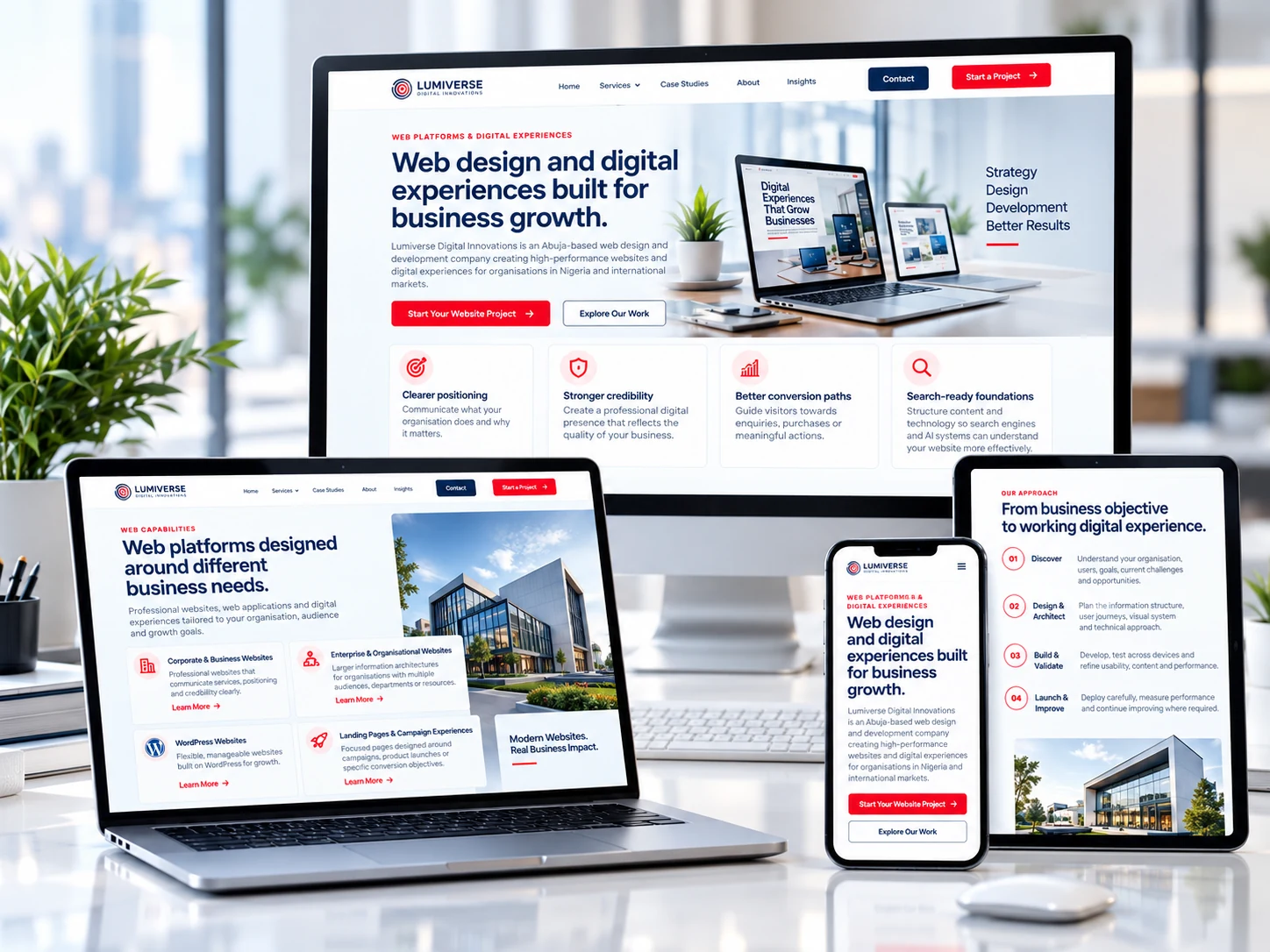
UI/UX DESIGN · DIGITAL PRODUCT EXPERIENCES
UI/UX design services for clearer digital experiences
Lumiverse designs websites, platforms and business tools around the people who use them. Our user experience design and user interface design connect user needs, business priorities and the realities of implementation.
We work with local and international teams from our Abuja headquarters, shaping digital product design from early discovery through responsive interfaces, prototypes and development handoff.
DESIGN WITH A BUSINESS PURPOSE
Make the next step clearer for users and your team.
A polished interface should help people understand information and complete the task they came to do. We agree which journeys matter, what needs to improve and how the design will be reviewed before investing in screens.
Clearer user journeys
Organise information and actions around real tasks, from finding a service to completing a purchase or using an internal tool. Make priorities visible instead of asking every screen to do everything.
Consistent interfaces
Use shared patterns for navigation, forms, content and feedback so users do not have to relearn each screen. Connect visual decisions to an agreed design language.
Fewer handoff unknowns
Work through responsive behaviour, component states and implementation constraints while designing. Give developers a clearer explanation of how the experience should work.
Reviewable decisions
Use wireframes, prototypes and structured feedback to examine the important flows. Define the questions a review should answer instead of treating subjective preference as the only measure.
OUR UI/UX CAPABILITIES
From UX strategy to interfaces ready for development.
An engagement can cover discovery and design only, a focused redesign, or design aligned with a separately scoped build. We define the required outputs around the product, its users and the decisions your team needs to make.
User research and UX strategy
Clarify audiences, goals, tasks and existing friction through agreed discovery methods. Where user access is available, plan appropriate interviews or research activities; distinguish evidence from assumptions that still need validation.
Information architecture
Structure pages, navigation and content relationships so people can find what they need. Map priority journeys, user roles and permissions before committing to detailed interface layouts.
Wireframing and prototyping
Explore layout, hierarchy and interaction through wireframes and interactive prototypes. Review the complete journey, including decision points and form states, before refining every visual detail.
User interface design
Develop the visual language for the agreed screens: typography, colour, spacing, components and feedback. UI design services include the relevant loading, error, empty and success states, rather than ideal screens alone.
Responsive interface design
Adapt content, navigation and controls across the agreed device sizes. Consider touch interaction, reading order, form usability and accessibility requirements as part of the interface, not as a separate desktop-to-mobile shrink exercise.
Usability review and design handoff
Review key tasks against the agreed questions and available user feedback. Document component behaviour, assets, responsive rules and decisions so the development team can implement the experience consistently.
WHEN DESIGN NEEDS TO WORK HARDER
Improve the journey, not just the appearance.
Website UX design and product interface design often begin with an existing experience. We look at how people move through it, what they need to understand and which constraints the next version must respect.
Visitors struggle to understand the offer or choose a relevant next step.
Forms ask for too much information or give unclear feedback.
A growing product has inconsistent components and navigation.
Mobile journeys feel like compressed desktop screens.
Stakeholders need a prototype before agreeing development scope.
Developers need clearer states, specifications or design decisions.
A redesign should preserve useful content, familiar journeys and working integrations where appropriate. We agree what to retain, what to change and what evidence or user feedback will guide the decisions.
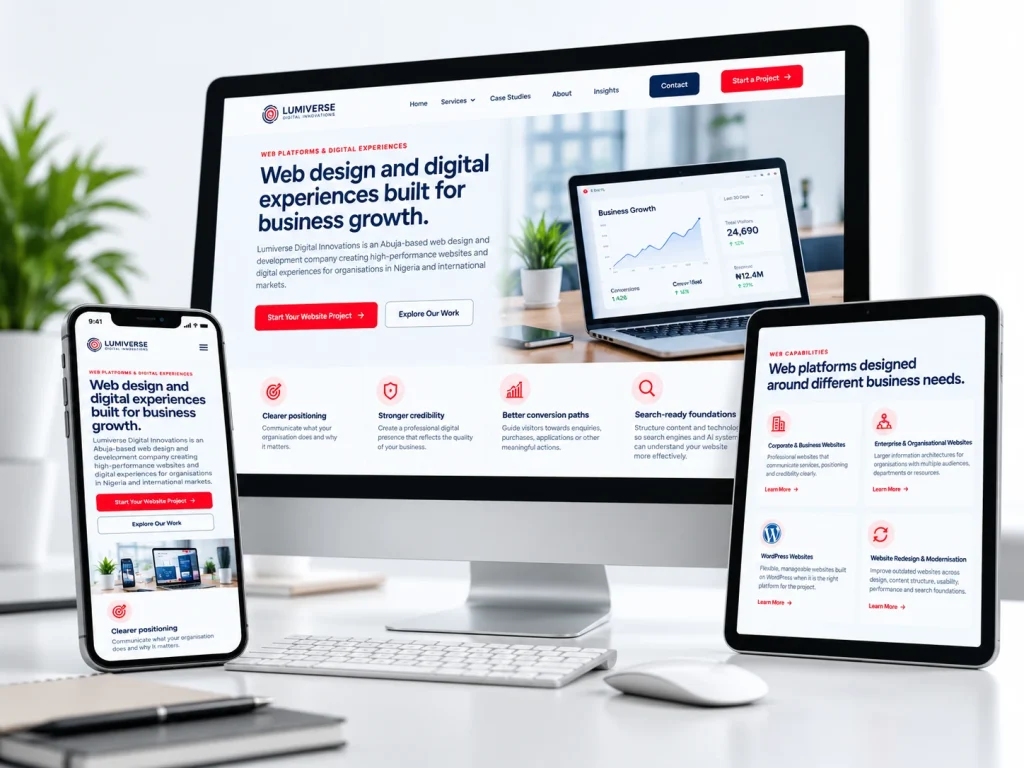
EXPERIENCES WE HELP SHAPE
Design for the tasks your users actually need to complete.
The design approach changes with the audience, the content and the operating environment. We define the important journeys rather than use the same screen pattern for every product.
Business and service websites
Help visitors understand an offer, assess relevant work and make an enquiry. Plan content hierarchy, service discovery and accessible enquiry paths across desktop and mobile.
E-commerce and customer journeys
Structure product discovery, catalogue navigation, checkout and account tasks. Consider the information shoppers need and the operational rules the interface must communicate.
Platforms and internal business tools
Work through role-based navigation, records, dashboards and multi-step tasks. Make permissions, status changes and exception states understandable to the people doing the work.
OUR DESIGN PROCESS
A clear path from discovery to development handoff.
We make the decisions visible as the work progresses. The number of screens, research activities, review rounds and prototype depth are agreed in the scope, so design can support delivery rather than become an open-ended exercise.
01
Discover
Understand the business, users, content and current experience. Review available evidence and identify assumptions, access needs and priority journeys.
02
Structure
Map information architecture, user flows and low-detail wireframes. Agree the hierarchy and task sequence before polishing the interface.
03
Design and prototype
Develop the agreed visual direction, responsive screens and interaction patterns. Connect the key screens into a prototype where it helps stakeholders review the journey.
04
Review and refine
Gather structured feedback and conduct the agreed usability checks. Prioritise issues by their effect on important tasks and record decisions.
05
Handoff and support
Prepare the assets, specifications, component states and implementation notes. Agree any support during development or post-build design review separately.
DESIGN THAT SUPPORTS ENGINEERING
A design handoff your developers can use.
A screen is only one view of an experience. We work through the behaviour, content and constraints behind it so the engineering team has a clearer basis for implementation. Outputs are agreed for the engagement rather than assumed to include every possible artefact.
Journey and structure
Priority user flows, information architecture and relevant role or permission considerations.
Responsive layouts
Agreed screen sizes, content priorities and behaviour when space becomes limited.
Component consistency
Reusable interface patterns, typography, colour and spacing decisions within the chosen design system.
Complete states
Relevant error, loading, empty, success and interaction states for the scoped journeys.
Assets and specifications
Prepared assets and notes explaining behaviour, content and implementation decisions.
Review priorities
A recorded list of issues, decisions and remaining questions for the next delivery stage.
DESIGN WITH A DELIVERY PATH
Connect the experience to the right engineering and growth services.
Design can be commissioned independently or coordinated with other Lumiverse capabilities. We keep design scope, build scope and ongoing optimisation clear so the handoff has an owner.
Web Design
Take approved website journeys and interfaces into a responsive business website implementation.
Explore Web Design
Custom Software Development
Translate platform and business-tool designs into application behaviour and supported integrations.
Explore Custom Software Development
SEO Services
Align navigation, content structure and discoverability requirements with the wider search strategy.
Explore SEO Services
For a WordPress delivery, coordinate the design with WordPress Development. Plan ongoing Website Maintenance separately from the design engagement.
SELECTED WEBSITE EXPERIENCE
See how structure and user journeys connect to real delivery.
These published case studies provide relevant website-delivery context. Their documented scopes support the examples below; they are not presented as standalone UX research studies or proof of guaranteed conversion gains.
Explore the specific challenges, scope and delivery described in each case study.

UX/UI design · Catalogue structure · Mobile commerce
Meenat Muslimart
The documented scope includes shopping-experience redesign, catalogue restructuring, mobile usability work and a WooCommerce implementation.
Read the case study →
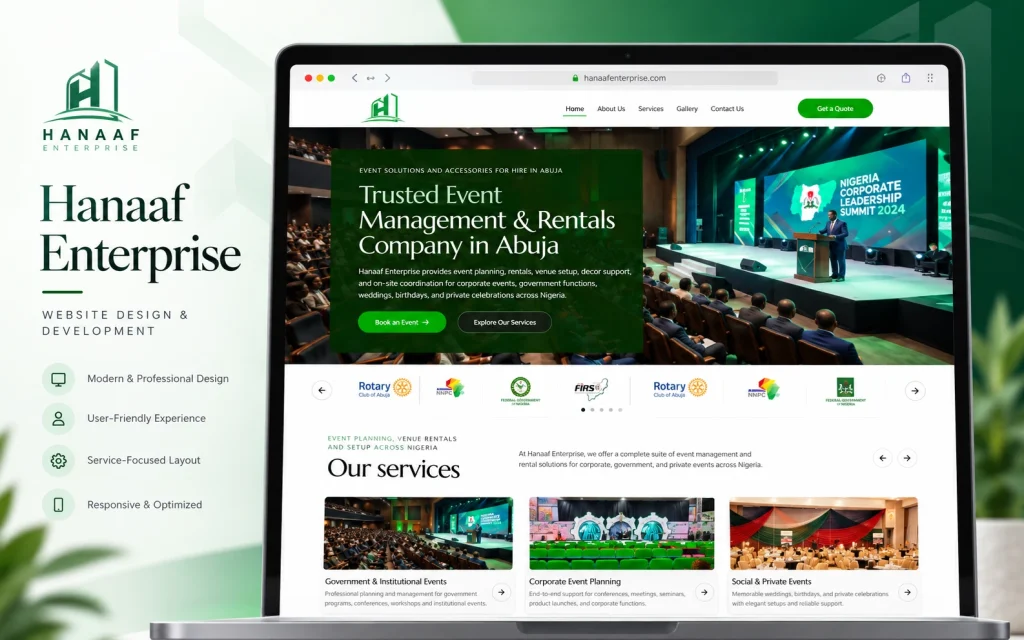
Information architecture · User journeys · Corporate website
Hanaaf Enterprise
The published case study describes website structure, customer journeys, responsive implementation and enquiry routes for an event-services business.
Read the case study →
FREQUENTLY ASKED QUESTIONS
Questions before you start designing.
What is the difference between UI and UX design?
UX design considers how people understand information and complete tasks across a journey. UI design shapes the interface they see and interact with. The two inform each other: visual polish cannot resolve an unclear journey, while a sound journey still needs a clear, consistent interface.
Can you redesign an existing website or product?
Yes. We can begin with a focused review of the existing experience and agree which journeys need attention. We identify useful content, familiar patterns and working integrations to preserve, then define the proposed changes and their implementation implications.
Can we commission design without development?
Yes. A design engagement can provide agreed wireframes, interfaces, prototypes and handoff materials for your development team. Implementation is not assumed to be included; we define the outputs and any support during development in the scope.
Do you conduct user research and usability testing?
We agree suitable methods around the project, the questions to answer and access to representative users. If direct user access is limited, we make that limitation clear. A review based on stakeholder feedback is not described as a completed user-testing study.
Will the designs cover mobile and accessibility?
We agree the target devices and accessibility requirements during scoping. The design work can address reading order, touch targets, contrast, form feedback and keyboard behaviour. Design review alone does not certify the accessibility of an eventual coded product.
Can you work with our existing brand or design system?
Yes. We review existing guidelines, components and technical constraints before proposing a direction. The scope may involve applying an established system, improving consistency or defining the interface patterns needed for the agreed product.
What will our developers receive?
The handoff can include approved screens, relevant component states, responsive notes, assets and explanations of interaction behaviour. We agree the required detail with the delivery team; a visual prototype is not treated as a substitute for every implementation decision.
How do you price a UI/UX engagement?
The scope depends on the product, number of journeys and screens, research access, prototype depth, review rounds and handoff requirements. We define these before proposing a fee and schedule. Ongoing product design or implementation support can be scoped separately.
START WITH THE EXPERIENCE
Bring the journey you want to improve.
Tell us who the users are, what they need to do and where the current experience falls short. We will help define the design priorities, useful deliverables and the right next step for your website or digital product.